

Thank you for Subscribing to Cannabis Business Insights Weekly Brief


Information is the oil of the 21st century. However, its value lies not simply in how much information an industry generates, but in how effectively it can be put to use. In cannabis extraction, where every processing decision can influence the outcome of a batch, making that information accessible and actionable has long been a challenge. A production run generates a detailed record of decisions, from how a cultivar is handled and the number of wash cycles performed to processing speeds, operating conditions, labor requirements and consumable usage. Yet, when these details remain scattered across separate records and systems, facilities see the outcome without understanding what shaped it.
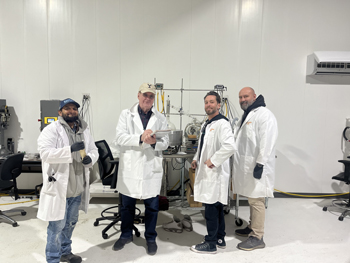 For Joseph Neihart, Founder and President of SolvixLMS Technologies, this disconnect revealed a gap in cannabis extraction laboratory software. Existing systems largely focused on inventory management, sample identification and compliance, but they provided limited visibility into the operational details behind production outcomes. Neihart wanted to understand what materials moved through a facility, also what resources, decisions and costs contributed to each stage of the process. Achieving that level of insight often required teams to gather information from multiple applications, spreadsheets and disconnected records. He envisioned a more integrated approach that could bring these details together within a single view.
SolvixLMS was built around this idea. Its platform connects production records, processing parameters and operational information, giving technicians and facility managers a more complete understanding of laboratory activities. By connecting process data with cost-related information, the company aims to help extraction businesses evaluate the financial impact of production decisions, identify opportunities for improvement and build greater consistency across their operations.
“For us, it is very important to know our costs behind our process. So without being able to track every part of the process and what goes into it, it makes that very difficult,” says Neihart.
Understanding What Influences Production
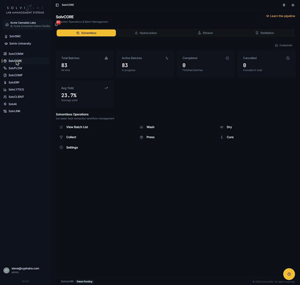
SolvixLMS captures production conditions across individual extraction stages, creating a detailed record of the variables influencing each batch. Through SolvCORE, its production and batch intelligence suite, facilities can record information such as temperature curves, humidity, stage profiles, fraction distribution, yields and technician performance. Connecting these details with batch records allows operators to compare production runs and investigate the conditions associated with differences in output.
This visibility is particularly important in solventless extraction, where seemingly small adjustments can influence the final yield. The number of times a cultivar is washed and the RPMs used during processing are among the variables that operators need to understand when evaluating production performance.
SolvixLMS records these parameters and uses AI and ML to analyze accumulated production data. As information builds across repeated runs, the system identifies patterns and generates recommendations that technicians can consider during subsequent production. For example, as data builds from multiple washes of a cultivar like Mellow Punch, the platform can use the recorded results to suggest process adjustments that may improve yield.
Technicians can also query production information directly through the platform's analytical functionality, asking questions and receiving understandable insights. This makes accumulated data easier to interpret without manually piecing together information from separate records. Instead of limiting production analysis to completed batches, the platform makes process knowledge accessible while technicians are carrying out their work.
Preserving Knowledge Across Production Teams
Understanding production variables is only part of achieving consistent results. Extraction facilities also depend on technicians who develop practical knowledge through repeated experience with particular cultivars, equipment and operating conditions. However, successful methods can remain tied to individual employees, making it difficult for other technicians to reproduce the same results when shifts change or experienced personnel leave.
 SolvixLMS addresses this challenge by integrating standard operating procedures directly into production workflows. Rather than keeping instructions in separate documents or filing systems, the platform guides technicians through established processes. This gives operators a consistent reference for carrying out each production stage and helps transfer operational knowledge between team members.
“So Solvix makes SOPs and the process standardized, and it's easy for one technician to replicate a batch that another technician did because of the way the software is leading you through the process,” says Neihart.
The approach also allows experienced technicians to identify, validate and reproduce process improvements. Relevant information can appear on their dashboards as they work, helping them evaluate adjustments and examine the results after production. Managers can review whether established procedures are being followed, while technicians have a clearer reference for repeating successful runs. Over time, this makes process knowledge an operational asset that can be retained and shared across the facility instead of remaining with individual employees.
Making Compliance Part of Production
The same emphasis on integrating operational information extends to compliance. SolvixLMS connects with METRC and is designed to connect with regulatory tracking systems such as BioTrack. Its SolvCOMP suite brings compliance and inventory management into the wider operational environment through lot-level tracking, licensing records, documentation and regulatory reporting workflows.
For the company, the objective is to make compliance information useful during production instead of treating it as a separate administrative function. As production data, inventory records and technician activities are captured within the same system, facilities gain a continuous audit trail that supports regulatory reporting while providing greater visibility into process deviations and their underlying causes.
Connecting Production with Business Performance
Production efficiency also depends on how well facilities manage the resources required to manufacture finished products. Consumables, packaging, procurement schedules and operating costs influence whether production can continue without unnecessary interruptions or unexpected expenses.
SolvixLMS extends its operational visibility into resource planning through SolvERP. The suite helps facilities track the consumables required for production, determine when supplies need to be reordered and understand associated costs and procurement lead times. This gives managers a clearer picture of the resources needed to meet production requirements and plan purchases accordingly.
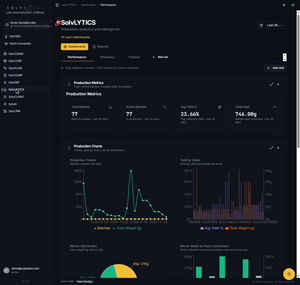
SolvLYTICS adds analytical capabilities through yield trends, technician performance benchmarking and cost-per-gram analysis. Drawing on a facility's own production records, it helps managers investigate performance across batches and identify areas that warrant closer attention. SolvFLOW supports production scheduling, equipment and technician assignments, while SolvCOMM provides a central view of batch status, alerts, staff notifications and shift handoffs. SolvCLIENT extends operational visibility to customers through client portals, split-contract support and yield notifications. Together, these capabilities give facilities a unified view of how technical production decisions influence the wider business.
Extending Intelligence to Equipment
SolvixLMS's longer-term vision extends beyond recording and analyzing production activity. The company plans to progressively connect its software with extraction equipment, reducing the manual effort required to collect process information.
 In the current phase, technicians manually enter and record production data. Through the planned development of SolvLINK, Solvix aims to introduce automated monitoring of environmental conditions and process metrics, followed by greater equipment control and automation. The company sees particular potential in closed-loop BHO extraction, where software could monitor extraction machines, execute programmed recipes and reduce the physical demands on technicians while improving safety. These capabilities remain part of Solvix's development roadmap.
Technology alone cannot address the extraction industry's challenges if technicians lack consistent training and operational guidance. Neihart identifies the absence of standardized technician education and formal training as another gap requiring attention.
Through Solvix Standard and planned verification initiatives, the company aims to encourage more consistent operational practices and help facilities evaluate their processes against GMP and relevant ANSI standards. Its education initiative, Solvix University, provides a central learning resource that helps customers understand the software, reduce reliance on support teams for basic guidance and improve adoption through accessible training materials.
Recognized as the Cannabis Extraction Lab Process Management Solutions of the Year 2026, SolvixLMS views the future of extraction as one driven by connected systems, retained expertise and continuous improvement. Its goal is to help facilities capture what works, replicate successful outcomes and build more reliable operations at scale.
For Joseph Neihart, Founder and President of SolvixLMS Technologies, this disconnect revealed a gap in cannabis extraction laboratory software. Existing systems largely focused on inventory management, sample identification and compliance, but they provided limited visibility into the operational details behind production outcomes. Neihart wanted to understand what materials moved through a facility, also what resources, decisions and costs contributed to each stage of the process. Achieving that level of insight often required teams to gather information from multiple applications, spreadsheets and disconnected records. He envisioned a more integrated approach that could bring these details together within a single view.SolvixLMS was built around this idea. Its platform connects production records, processing parameters and operational information, giving technicians and facility managers a more complete understanding of laboratory activities. By connecting process data with cost-related information, the company aims to help extraction businesses evaluate the financial impact of production decisions, identify opportunities for improvement and build greater consistency across their operations.
“For us, it is very important to know our costs behind our process. So without being able to track every part of the process and what goes into it, it makes that very difficult,” says Neihart.
Understanding What Influences Production
SolvixLMS captures production conditions across individual extraction stages, creating a detailed record of the variables influencing each batch. Through SolvCORE, its production and batch intelligence suite, facilities can record information such as temperature curves, humidity, stage profiles, fraction distribution, yields and technician performance. Connecting these details with batch records allows operators to compare production runs and investigate the conditions associated with differences in output.
This visibility is particularly important in solventless extraction, where seemingly small adjustments can influence the final yield. The number of times a cultivar is washed and the RPMs used during processing are among the variables that operators need to understand when evaluating production performance.
-
For us, it is very important to know our costs behind our process. So without being able to track every part of the process and what goes into it, it makes that very difficult.
SolvixLMS records these parameters and uses AI and ML to analyze accumulated production data. As information builds across repeated runs, the system identifies patterns and generates recommendations that technicians can consider during subsequent production. For example, as data builds from multiple washes of a cultivar like Mellow Punch, the platform can use the recorded results to suggest process adjustments that may improve yield.
Technicians can also query production information directly through the platform's analytical functionality, asking questions and receiving understandable insights. This makes accumulated data easier to interpret without manually piecing together information from separate records. Instead of limiting production analysis to completed batches, the platform makes process knowledge accessible while technicians are carrying out their work.
Preserving Knowledge Across Production Teams
Understanding production variables is only part of achieving consistent results. Extraction facilities also depend on technicians who develop practical knowledge through repeated experience with particular cultivars, equipment and operating conditions. However, successful methods can remain tied to individual employees, making it difficult for other technicians to reproduce the same results when shifts change or experienced personnel leave.
SolvixLMS addresses this challenge by integrating standard operating procedures directly into production workflows. Rather than keeping instructions in separate documents or filing systems, the platform guides technicians through established processes. This gives operators a consistent reference for carrying out each production stage and helps transfer operational knowledge between team members.“So Solvix makes SOPs and the process standardized, and it's easy for one technician to replicate a batch that another technician did because of the way the software is leading you through the process,” says Neihart.
The approach also allows experienced technicians to identify, validate and reproduce process improvements. Relevant information can appear on their dashboards as they work, helping them evaluate adjustments and examine the results after production. Managers can review whether established procedures are being followed, while technicians have a clearer reference for repeating successful runs. Over time, this makes process knowledge an operational asset that can be retained and shared across the facility instead of remaining with individual employees.
Making Compliance Part of Production
The same emphasis on integrating operational information extends to compliance. SolvixLMS connects with METRC and is designed to connect with regulatory tracking systems such as BioTrack. Its SolvCOMP suite brings compliance and inventory management into the wider operational environment through lot-level tracking, licensing records, documentation and regulatory reporting workflows.
For the company, the objective is to make compliance information useful during production instead of treating it as a separate administrative function. As production data, inventory records and technician activities are captured within the same system, facilities gain a continuous audit trail that supports regulatory reporting while providing greater visibility into process deviations and their underlying causes.
Connecting Production with Business Performance
Production efficiency also depends on how well facilities manage the resources required to manufacture finished products. Consumables, packaging, procurement schedules and operating costs influence whether production can continue without unnecessary interruptions or unexpected expenses.
SolvixLMS extends its operational visibility into resource planning through SolvERP. The suite helps facilities track the consumables required for production, determine when supplies need to be reordered and understand associated costs and procurement lead times. This gives managers a clearer picture of the resources needed to meet production requirements and plan purchases accordingly.
SolvLYTICS adds analytical capabilities through yield trends, technician performance benchmarking and cost-per-gram analysis. Drawing on a facility's own production records, it helps managers investigate performance across batches and identify areas that warrant closer attention. SolvFLOW supports production scheduling, equipment and technician assignments, while SolvCOMM provides a central view of batch status, alerts, staff notifications and shift handoffs. SolvCLIENT extends operational visibility to customers through client portals, split-contract support and yield notifications. Together, these capabilities give facilities a unified view of how technical production decisions influence the wider business.
Extending Intelligence to Equipment
SolvixLMS's longer-term vision extends beyond recording and analyzing production activity. The company plans to progressively connect its software with extraction equipment, reducing the manual effort required to collect process information.
In the current phase, technicians manually enter and record production data. Through the planned development of SolvLINK, Solvix aims to introduce automated monitoring of environmental conditions and process metrics, followed by greater equipment control and automation. The company sees particular potential in closed-loop BHO extraction, where software could monitor extraction machines, execute programmed recipes and reduce the physical demands on technicians while improving safety. These capabilities remain part of Solvix's development roadmap.Technology alone cannot address the extraction industry's challenges if technicians lack consistent training and operational guidance. Neihart identifies the absence of standardized technician education and formal training as another gap requiring attention.
Through Solvix Standard and planned verification initiatives, the company aims to encourage more consistent operational practices and help facilities evaluate their processes against GMP and relevant ANSI standards. Its education initiative, Solvix University, provides a central learning resource that helps customers understand the software, reduce reliance on support teams for basic guidance and improve adoption through accessible training materials.
Recognized as the Cannabis Extraction Lab Process Management Solutions of the Year 2026, SolvixLMS views the future of extraction as one driven by connected systems, retained expertise and continuous improvement. Its goal is to help facilities capture what works, replicate successful outcomes and build more reliable operations at scale.
Assessing Cannabis Extraction Software Beyond Inventory Records
A change in washing cycles or agitation speed can alter the yield of a solventless cannabis extraction batch. Yet the final weight alone cannot explain whether the difference came from the material or decisions made during processing. Laboratory process management software needs to give facility operators a way to investigate those differences, not simply record the resulting inventory.
That starts with the level of detail captured during production. Batch identifiers and material movements establish traceability, but understanding losses requires records of how material passes through washing, sieving, freeze-drying and pressing. Environmental readings and equipment settings become useful when they can be examined alongside the yield at each stage. A system that records only the final output leaves managers comparing results without the information needed to explain them. Before committing to a provider, facilities need to determine which parameters technicians can record and whether the resulting data can be traced back to individual batches.
Collecting measurements is only part of the decision. Processing conditions vary by cultivar, and an adjustment that improves one batch may not produce the same result in another. Historical records should help technicians compare relevant runs and recognize which changes warrant testing. Access to that information during production can be particularly valuable, when there is still an opportunity to adjust a process. The assessment should cover how clearly the software presents its findings, whether staff can question the data and how recommendations relate to recorded conditions rather than isolated performance figures.
Even useful recommendations have limited value if successful methods cannot be repeated. Experienced technicians may know how to adjust a wash or press, but facilities need that knowledge to remain available across shifts. Standard operating procedures should be accessible where work takes place, with enough process detail to guide another technician through a comparable batch. Managers also need a record of whether procedures were followed and what changed when results improved or declined. That makes process consistency a matter of documented execution rather than dependence on individual memory.
“SolvixLMS also provides queryable production information and guides technicians through standardized procedures, allowing managers to review adherence and technicians to replicate established batch processes.”
Production decisions carry purchasing and compliance consequences beyond yield. Consumables must be available when scheduled runs require them, and their usage affects the cost of finished material. Connecting batch records to purchasing schedules and cost reports allows managers to examine production economics before shortages interrupt work. Regulatory traceability remains essential. Any process management system must also fit the facility's existing reporting obligations, without treating a detailed production history as a substitute for required regulatory records.
SolvixLMS records technician-entered production parameters and uses AI and machine learning to develop recommendations from accumulated process data. The platform also provides queryable production information and guides technicians through standardized procedures, allowing managers to review adherence and technicians to replicate established batch processes. Its enterprise resource planning module tracks consumable requirements, associated costs, reorder timing and procurement lead times, while integration with Metrc connects the platform to regulatory tracking. Automated environmental monitoring is planned for a subsequent SolveLink phase, with equipment control and automation intended to follow. The combination of parameter-level records and point-of-work guidance gives extraction facilities a means to investigate yield differences while making successful processing methods easier to repeat.
...Read more
