

Thank you for Subscribing to Cannabis Business Insights Weekly Brief
Cannabis Cultivators: Scaling Controlled Agriculture in a Highly Regulated and Quality-Driven Market

Cannabis cultivators are transitioning from fragmented, cultivation-focused operations into disciplined agricultural enterprises that prioritize consistency, compliance, and product differentiation. What began as a supply-driven market has matured into a competitive landscape where quality, efficiency, and brand alignment determine long-term viability. For CEOs and business leaders, cultivation is no longer just about growing plants; it is about managing a controlled production system that delivers predictable outcomes while adapting to evolving regulatory and consumer expectations.
Advancing Accountability in Handheld RFID Seed-to-Sale Systems

Cannabis operators work within one of the most tightly monitored commercial environments in the U.S. State-mandated seed-to-sale tracking systems require licensees to reconcile physical inventory with digital records at every stage, from cultivation to retail. Discrepancies are not administrative inconveniences; they trigger audits, financial penalties and reputational damage. Manual inventory practices remain common across cultivation rooms and dispensary vaults, where staff rely on printed reports, spreadsheets and handwritten counts. The result is predictable: human error, delayed reconciliations and labor costs that compound over time.
Revolutionizing Supply Chains: The Impact of Handheld RFID Seed-to-Sale Software

Highly regulated industries such as cannabis, pharmaceuticals, agriculture, and specialty crops operate under strict traceability mandates that demand complete product lifecycle transparency. Governments require businesses to document cultivation, processing, transportation, storage, and retail transactions with precise audit trails. Traditional barcode systems and manual data entry processes often introduce delays, errors, and compliance risks. Handheld-based RFID seed-to-sale software has emerged as a transformative solution that delivers real-time tracking, automated data capture, and operational intelligence from origin to final sale.
Cultivator of the Year: The New Benchmark for Cannabis Cultivation Excellence

Executives responsible for sourcing cannabis cultivation partners operate in a market defined by scrutiny, volatility and rising consumer expectations. Mature legal markets such as New York have intensified pressure on cultivators to deliver consistent flower quality while maintaining economic viability. Buyers must navigate a crowded field where branding often eclipses agricultural discipline, making it increasingly difficult to identify producers capable of sustaining premium standards at scale. Cultivation leadership today rests less on marketing narratives and more on the depth of agronomic knowledge, genetic stewardship and post-harvest precision embedded within a grower’s operation.
Compliance Architecture for Cannabis Cultivators and Dispensary Operators
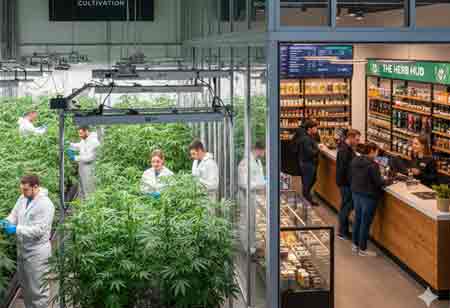
The cannabis industry is transitioning from fragmented, small-scale cultivation into a regulated, capital-intensive, and professionally managed sector. As legalization expands across medical, wellness, and adult-use markets, cannabis operators face growing expectations related to compliance, operational efficiency, product consistency, and environmental responsibility. In this growing landscape, cannabis design and engineering-assist services have become essential, supporting operators in translating regulatory requirements and biological complexity into efficient, future-ready infrastructure.
Evaluating Reliable THC Gummy Manufacturing for Retail and Wellness Brands

Demand for hemp-derived edibles has expanded rapidly as wellness brands, dispensaries and specialty retailers look for differentiated ingestible products that combine consistent dosing, appealing flavor and dependable regulatory compliance. THC gummies sit at the center of this market expansion because they offer predictable consumption, familiar format and scalable private-label potential. Yet growth has introduced a complex supplier landscape where product inconsistency, questionable ingredient sourcing and unclear testing practices can expose buyers to reputational and regulatory risk.
Elevating Cannabis Cultivation: The Importance of Engineering in Modern Operations

The cannabis industry is transitioning from fragmented, small-scale cultivation into a regulated, capital-intensive, and professionally managed sector. As legalization expands across medical, wellness, and adult-use markets, cannabis operators face growing expectations related to compliance, operational efficiency, product consistency, and environmental responsibility. In this growing landscape, cannabis design and engineering-assist services have become essential, supporting operators in translating regulatory requirements and biological complexity into efficient, future-ready infrastructure.
Strategic Design and Engineering Leadership for Modern Cannabis Facilities

Executives responsible for cannabis facility development face a more complex environment than at any point in the industry’s evolution. Early market entrants often focused on speed to licensure and rapid buildouts. Today, capital scrutiny, energy constraints and multi-state standardization demands have reshaped priorities. A cultivation or extraction site must now perform predictably, scale logically and withstand utility and regulatory pressures that can materially affect returns. Design and engineering support is no longer a narrow drafting exercise. It sits at the center of capital planning, infrastructure strategy and long-term efficiency.
Scaling Edibles Production: How THC Gummies Suppliers Are Meeting Global Demand

The cannabis edible sector continues to evolve rapidly, with THC-infused gummies emerging as one of the most in-demand product formats among consumers worldwide. Fueled by innovation, changing consumer preferences, and expanding legal markets, manufacturers are scaling up production to meet both recreational and wellness-oriented demand.

